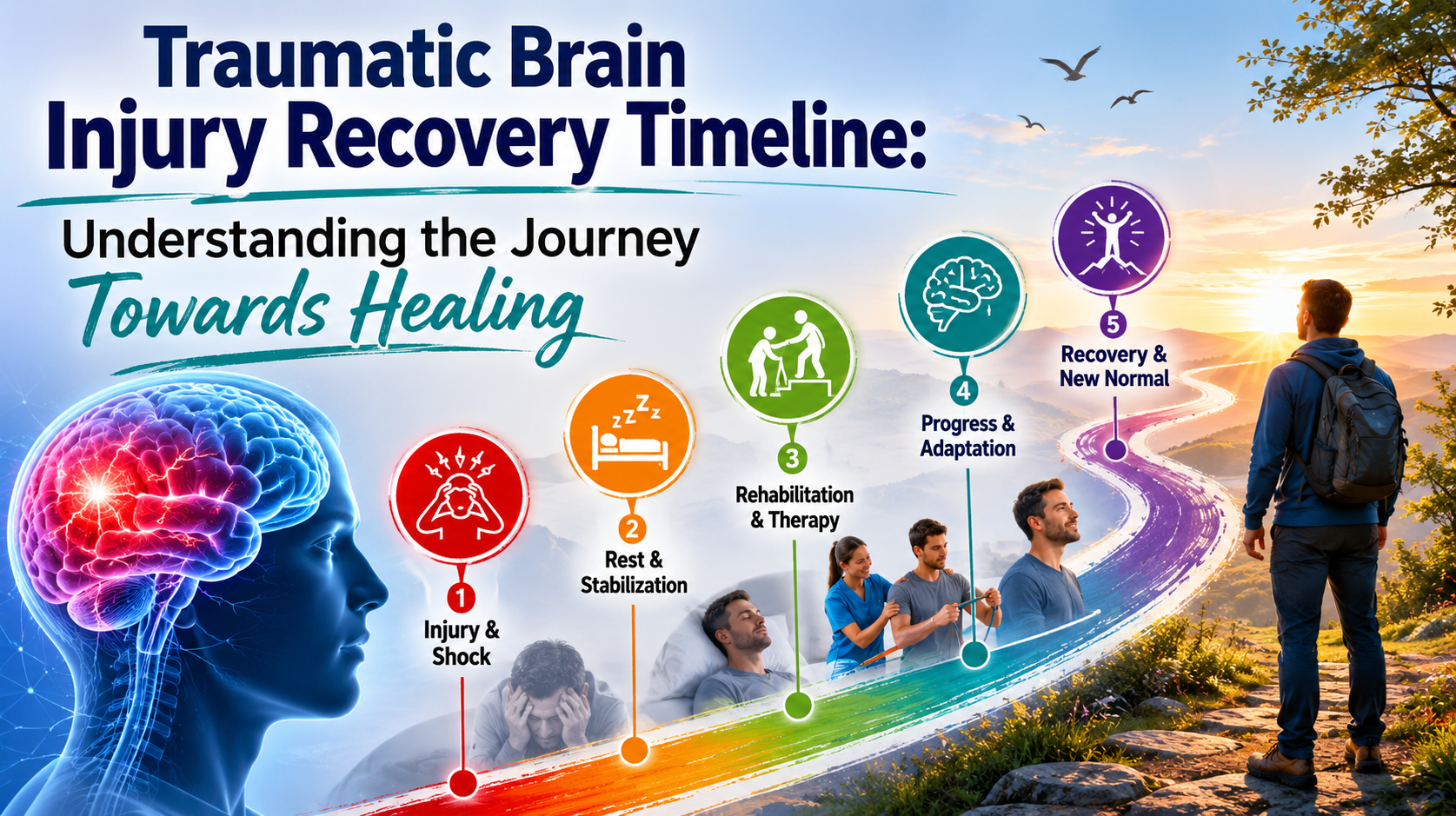
Traumatic Brain Injury Recovery Timeline: Understanding the Journey Towards Healing
15 Jun, 2026
Traumatic Brain Injury Recovery Timeline: Understanding the Journey Towards Healing
A traumatic brain injury (TBI) can change life unexpectedly—not only for the patient but also for their entire family. A sudden fall, road accident, sports injury, or impact to the head can lead to challenges that affect movement, memory, speech, emotions, and daily activities.
One of the most common questions families ask after a traumatic brain injury is:
“How long will recovery take?”
The truth is that brain injury recovery does not follow a fixed timeline. Every person heals differently. Some individuals recover within weeks, while others may require months or years of rehabilitation and supportive care.
Understanding the recovery journey can help patients and families prepare emotionally, set realistic expectations, and stay encouraged during the healing process.
What Is a Traumatic Brain Injury (TBI)?
A traumatic brain injury occurs when an external force causes damage to the brain.
Common causes include:
- Road traffic accidents
- Falls
- Sports-related injuries
- Workplace accidents
- Assault or physical trauma
- Head injuries from sudden impact
Traumatic brain injuries may range from mild to severe.
Mild TBI (Concussion)
Symptoms may include:
- Headache
- Dizziness
- Temporary confusion
- Nausea
- Difficulty concentrating
- Sensitivity to light or noise
Moderate to Severe TBI
Patients may experience:
- Loss of consciousness
- Memory problems
- Difficulty speaking
- Weakness or paralysis
- Behavioral changes
- Balance difficulties
- Swallowing problems
- Cognitive impairment
- Long-term disability
Recovery depends on factors such as injury severity, age, overall health, and how early rehabilitation begins.
The Recovery Timeline After Traumatic Brain Injury
Healing often happens gradually. Progress may not always be linear. Some days show improvement, while others may feel slower.
Understanding the general stages of recovery can help families navigate the journey more confidently.
Phase 1: Immediate Medical Stabilization (First 24–72 Hours)
The first few days after injury focus primarily on saving life and preventing further brain damage.
Medical teams work to:
- Stabilize breathing and circulation
- Control brain swelling
- Prevent complications
- Monitor neurological function
- Perform emergency surgeries if needed
- Manage pain and critical care needs
During this stage, patients with severe injuries may require intensive care monitoring.
Family members often feel anxious during this period because recovery outcomes may still be uncertain.
Medical stabilization creates the foundation for future rehabilitation.
Phase 2: Early Recovery Phase (First Few Days to First Few Weeks)
Once the patient becomes medically stable, rehabilitation planning often begins.
Some patients may experience:
- Improved alertness
- Better awareness of surroundings
- Gradual return of communication abilities
- Early movement recovery
- Reduced confusion
However, some challenges may still remain:
- Weakness
- Fatigue
- Memory difficulties
- Mood changes
- Difficulty swallowing
- Balance problems
Early rehabilitation interventions may include:
Physiotherapy
Helps improve:
- Muscle strength
- Mobility
- Balance
- Bed mobility
- Sitting and standing tolerance
Occupational Therapy
Focuses on:
- Daily activities
- Hand coordination
- Personal care independence
- Functional training
Speech and Swallowing Therapy
Supports:
- Communication improvement
- Cognitive recovery
- Safe swallowing ability
Starting rehabilitation early often improves long-term outcomes.
Phase 3: Active Rehabilitation Phase (1–6 Months)
This period is often considered one of the most important stages in traumatic brain injury recovery.
The brain has an incredible ability called neuroplasticity, which allows healthy areas of the brain to adapt and create new pathways.
During this phase, patients may gradually regain:
- Walking ability
- Hand movement
- Speech clarity
- Memory function
- Balance
- Daily living skills
Therapy intensity often increases.
Recovery programs may include:
Physical Rehabilitation
Focus areas:
- Walking training
- Strength exercises
- Coordination activities
- Postural control
- Endurance improvement
Cognitive Rehabilitation
Brain injury can affect thinking abilities.
Therapy may help improve:
- Attention span
- Problem-solving skills
- Memory
- Planning abilities
- Decision-making
Emotional and Psychological Support
Many patients experience:
- Anxiety
- Depression
- Frustration
- Emotional outbursts
- Reduced confidence
Professional counselling and family support become extremely valuable.
Families may notice meaningful improvements during this period, although recovery speed varies significantly.
Phase 4: Long-Term Recovery (6 Months to 2 Years and Beyond)
Recovery from traumatic brain injury often continues long after hospital discharge.
Many patients continue improving for months or even years.
Long-term rehabilitation may focus on:
- Mobility improvement
- Community reintegration
- Occupational rehabilitation
- Independent living skills
- Emotional adjustment
- Social participation
Some individuals return fully to previous activities.
Others may continue to live with certain challenges and require long-term support.
Recovery does not always mean returning to exactly how life was before injury. Sometimes recovery means adapting, learning new strategies, and achieving the highest possible level of independence.
Factors That Influence Recovery Speed
Every brain injury is unique.
Several factors influence recovery outcomes:
Severity of Injury
Starting rehabilitation early may improve functional outcomes.
Age
Younger individuals may sometimes recover more efficiently, although recovery is possible at any age.
Overall Health
Nutrition, medical stability, and physical health affect healing.
Family Support
Encouragement, emotional support, and caregiver involvement play an important role.
Consistency of Therapy
Regular rehabilitation sessions often produce better results over time.
Common Challenges During Recovery
Healing after traumatic brain injury is not always straightforward.
Patients and caregivers may experience challenges such as:
- Muscle weakness
- Difficulty walking
- Speech problems
- Swallowing difficulties
- Memory loss
- Fatigue
- Sleep disturbances
- Emotional instability
- Reduced concentration
- Behavioral changes
These difficulties can improve gradually with proper rehabilitation and medical care.
The Importance of Specialized Rehabilitation
Recovery after traumatic brain injury often requires a multidisciplinary approach.
Comprehensive rehabilitation may involve:
- Neurological care
- Physiotherapy
- Occupational therapy
- Speech therapy
- Nutritional planning
- Nursing support
- Psychological counselling
- Family education
Structured rehabilitation programs help patients regain independence safely and effectively.
Supporting a Loved One Through Recovery
Families often become essential partners in rehabilitation.
Helpful ways to support recovery include:
- Encouraging therapy participation
- Maintaining patience
- Celebrating small achievements
- Following rehabilitation recommendations
- Creating a safe environment
- Offering emotional reassurance
Progress may sometimes feel slow.
Walking a few extra steps.
Speaking a complete sentence.
Holding a spoon independently.
Remembering a familiar name.
These moments may seem small—but during brain injury recovery, they can represent major victories.
Recovery Is a Journey, Not a Race
Traumatic brain injury recovery takes time.
Healing may happen gradually, with progress appearing in small steps rather than sudden changes.
opportunities for meaningful recovery.
While every recovery journey is different, one truth remains constant:
Improvement is possible.
Hope remains powerful.
And with the right support, patients can continue rebuilding strength, independence, and confidence—one step at a time.
Happy Home Hospital & Rehab
Where Healing Begins
Exclusive Rehabilitation Centre for Neuro & Spine Patients
Resent Post